Some artists are in such high demand that they cannot keep up with it. In the late 1990’s, I was hired to be a “ghost painter” for a gentleman whose gallery shows were selling out. He didn’t want to turn down commissions or cancel his contracts with a publisher, so he recruited me to be his assistant. And that’s when I began painting cats.
Although I had studied oil painting at the Art Students League of New York, I earned my BFA degree in printmaking at California College of the Arts. I knew a lot about color theory, but most of my lithographs, etchings, and relief prints were in black and white.
When I took up the brush in my new role as a ghost painter, I had a lot to learn. The artist I assisted was a kind and patient mentor, yet very demanding. I would go to his office to pick up a canvas with a rough sketch on it. He always sent me back to my studio with a small comp painting and a few photos to use for reference. Initially, my paintings needed a lot of retouching, after I turned them in. As I improved, the artist had little left to do besides add his signature.
The tradition of employing assistants to work on paintings extends back centuries. English artist Sir Joshua Reynolds (1723–1792) often hired drapery painters to render the elaborate clothing worn by many of the men and women he depicted. In the 1750’s, Sir Joshua charged 48 guineas for a full-length portrait. Out of this, he paid his assistant 15 guineas. I don’t mind telling you that the percentage of the proceeds that I received for my efforts was far less!
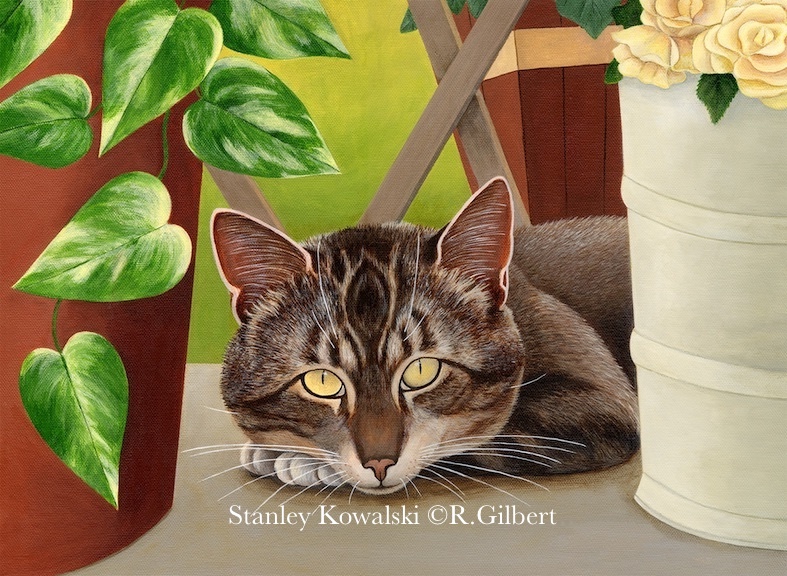
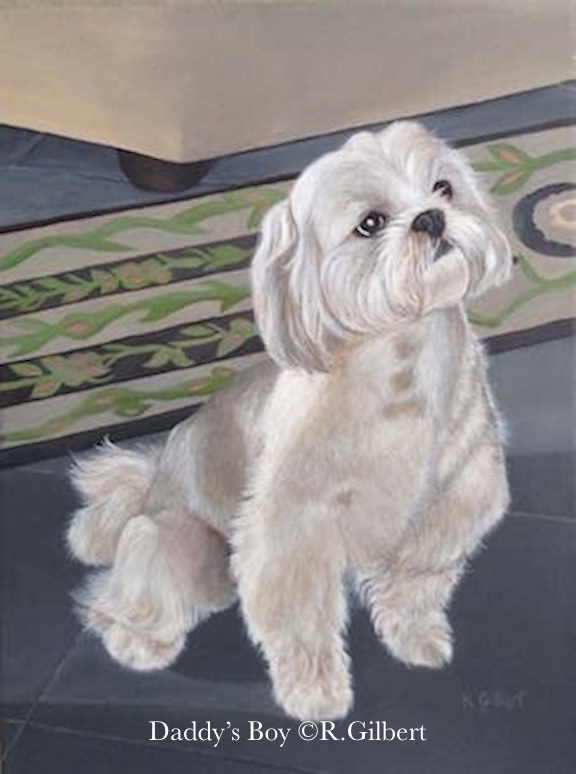
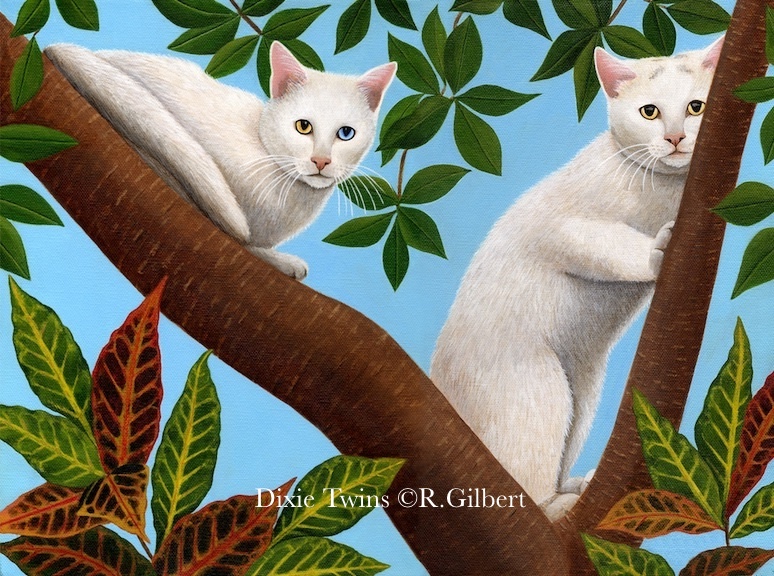
But my new skills had immeasurable value. I went on to paint some of the cats (and a dog) that I lived with or met in my travels. Their portraits capture the spirit in time and place; a reflection of my personal journey.
—Roxane Gilbert
My paintings are below. If you would like to see my lithographs and relief prints, please visit the Printmaking Gallery at Art*Connections.




 Roxane Gilbert