“Maybe she doesn’t speak English,” said a short, chubby, middle-aged woman.
“Or maybe she’s deaf,” her friend observed.
“Hello? Hello? Can you understand me?” shouted the first woman.
I was just coming to the statue of Charles James Fox at the north end of Bloomsbury Square, when I stopped and turned my head to the right to see who was speaking. Two nicely dressed ladies were crossing the street, waving at me frantically.

“Do you understand English?” demanded the taller of the two, in a distinctly American accent.
“Yes,” I affirmed.
“We’ve been trying to get your attention!”
“How may I help you?” I replied.
“Are you British?” asked the shorter one.
“No.”
“Oh.” She looked dejected. “We were hoping you could give us directions to the British Museum.”
“I get lost all of the time in London,” I said. “It doesn’t help that the street names seem to change from block to block. But you’re in luck. We’re very close to the Museum. Keep going on Bloomsbury Place, and you will see it in a couple of minutes.”
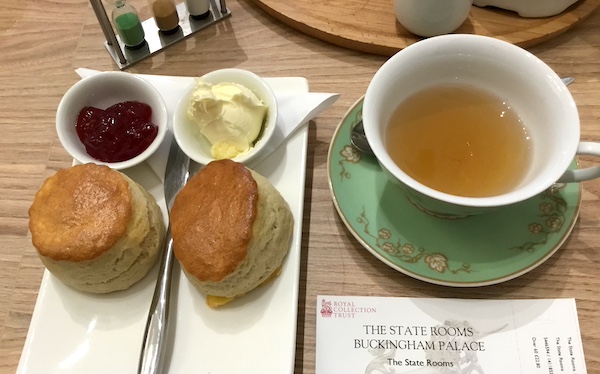
Both women looked doubtful, but they nodded their heads and resumed their walk. Since I was traveling in the same direction and didn’t care to chat with them, I lingered for a moment and gazed into the small park. That morning, I had gone on a tour of Buckingham Palace, and now I was going to have tea at a wonderful little shop across the street from the British Museum.
When I got to my destination, I was disappointed to see that it was closed for a special event. However, I had passed another tea shop on my way there, so I backtracked a little and went inside.
It was the end of September of 2019, and I was in town doing research on the life of a relatively obscure British Army officer, who had nevertheless captured my imagination. My plan was to write his biography, but much later I would realize that this dynamic man deserved to have his colorful story told more robustly. Fiction would enable me to burst through the restrictive boundaries of a dry, academic narrative.
This was my second trip to London this year. The city the Anglo-Irish soldier loved so much had gotten under my skin. Just a few weeks after getting home from my previous visit, I found myself craving a return. I would only go back one more time, before the western world was shut down by a pandemic, caused by a highly infectious virus, likely engineered with a wink and a nod from someone at the ironically named National Institute of Allergy and Infectious Diseases.
Americans were finally free to travel to England without COVID restrictions in mid-2022, so I went back to continue my research. London had undergone some unpleasant changes. An increase in graffiti is usually an indicator of greater ills. In fact, I saw several small homeless encampments on a main thoroughfare, including one right outside of my hotel in Fitzrovia. Most of the people living on the street displayed symptoms of mental health or drug problems.
One morning, I was having coffee outside of a Starbucks, when a homeless man approached me. We ended up having an extensive conversation. Right off the bat, he divulged that he was in his fifties and was schizophrenic. Although he assured me he had taken his psych meds that morning, I remained on guard, as he continued to tell me about his life. He was bright, thoughtful, and very creative. After about 20 minutes, I excused myself, but he wouldn’t let me pass, until I had taken his email address and offered my assurance that I would keep in touch with him.
About a half hour later, I was sitting on a park bench under a shade tree in Russell Square, watching a family play with a Yorkshire terrier, when a large man asked if he could sit down. I nodded. He was on a FaceTime call with another man, and I was pretty sure they were speaking Pashto. When the call ended, he turned his attention to me, and for the next hour, I wondered if I was going to get out of the park alive.
It all began innocently enough. This man explained that he had arrived in London from Kabul in the airlift one year earlier, after the Americans withdrew from Afghanistan. He had been an interpreter for the British and Americans, and both nations had offered him asylum. After showing me a letter on his iPhone from the US State Department, he confided that he loved England and the British people, and had no intention of going to America. From there, things devolved rapidly. He began reciting religious texts in Arabic and ranting about when and why it is necessary to kill Christians. Finally, he calmed down, and began instructing me on how to dress properly.
It was about 2:00 on a hot summer afternoon. The park was crowded. Assuming the same placid manner I had used when assuring the schizophrenic man that I would stay in touch, I looked this man in the eye and told him that I had learned a lot from him and would think about everything he told me. I stood up, backed away, then turned and walked swiftly towards a group of people who were exiting the park.
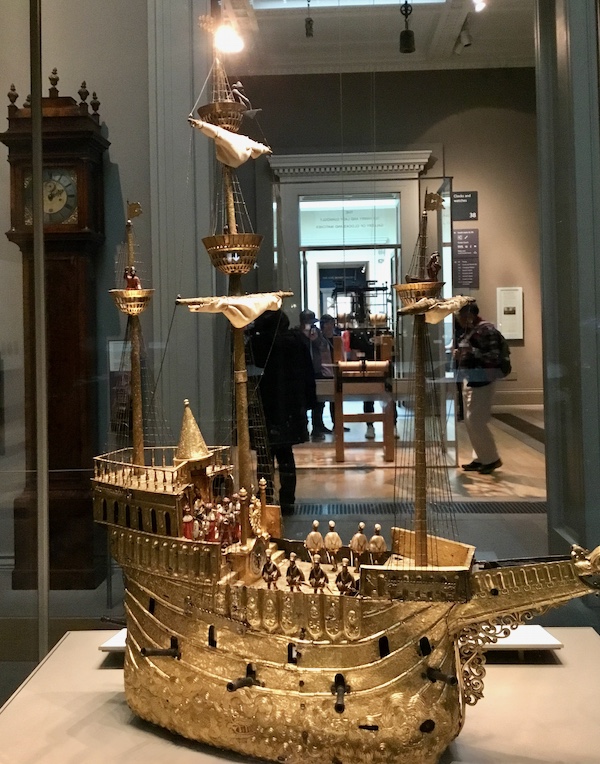
The British Museum was just down the street. Once I made it through the long line and the security check, I went to look at the old clocks. They are objects of exquisite beauty. Sometimes I wish I could experience the City of London as it once was, back in the days when those timeless works of art were crafted.
Discover more from Roxane Gilbert
Subscribe to get the latest posts sent to your email.
 Roxane Gilbert