There is a writers conference coming soon to a city near me. Wouldn’t you know it? The first literary agent listed among the panelists is the New Yorker I wrote about in November (see Flying Blind), who proudly announced on X-Twitter that she categorizes people by race and prioritizes manuscripts submitted by People of Color (POC). It’s nice that she is willing to meet face-to-face with aspiring authors, who are paying $169 for the privilege of hearing her elucidate some pearls of wisdom. Her personal interactions with potential clients will make it easier to assess an applicant’s racial identity. What a great opportunity to select whatever color may be missing from her pencil box.

Certainly the young lady in New York is not alone in the literary community, when it comes to pridefully displaying her bigotry. While she gaily signals her social-justice-warrior creds on X-Twitter, an agent in California cuts to the chase on her employer’s website:

If we grant these ladies the benefit of the doubt, we can assume that they see themselves as activists repairing the damage inflicted by centuries of white privilege, toxicity, and colonization. Or something. Their intentions are good. Right? I mean, you know….
In his writings, St. Francis de Sales (1567-1622) shared a quote from St. Bernard of Clairvaux (1090-1153): “L’enfer est plein de bonnes volontés ou désirs.” [Hell is full of good intentions or desires.]

More than 60 years have passed since Martin Luther King, Jr. spoke so eloquently of his vision. “I have a dream that my four little children will one day live in a nation where they will not be judged by the color of their skin but by the content of their character.” Somehow those words were inverted by the well-meaning agents, who consider it a badge of honor to judge authors by the color of their skin rather than the content of their manuscripts.
As someone who has spent years researching the history and culture of Georgian England, I can confidently state that we have made strides since those days. However, the progress did not come without cost. Unfortunately, the stereotyping by group and the balkanization of society that these woke agents are inadvertently supporting evolves naturally after decades of pigeonholing us into narrower and narrower identities.
There is more to be said, but I will simply offer one illustration of what I mean. A fashionable aristocratic man in the 1700’s might go to a ball wearing a velvet coat, embroidered with silk or shiny metal threads, and embellished with gemstones, sequins, and lace netting. His shirt would have ruffled cuffs. He wore form-fitting, knee-length breeches with silk stockings, and powdered his elaborately styled hair. It was the mark of a true gentleman to keep his lower legs pressed together, if he sat with his legs crossed. Men were skilled in ballroom dancing and some of them learned ballet. A bejeweled gentleman would not hesitate to draw his sword and use it in defense of a lady. If you offended his honor, he would challenge you to a duel with pistols. No one questioned his manhood. Or at least, not more than once.

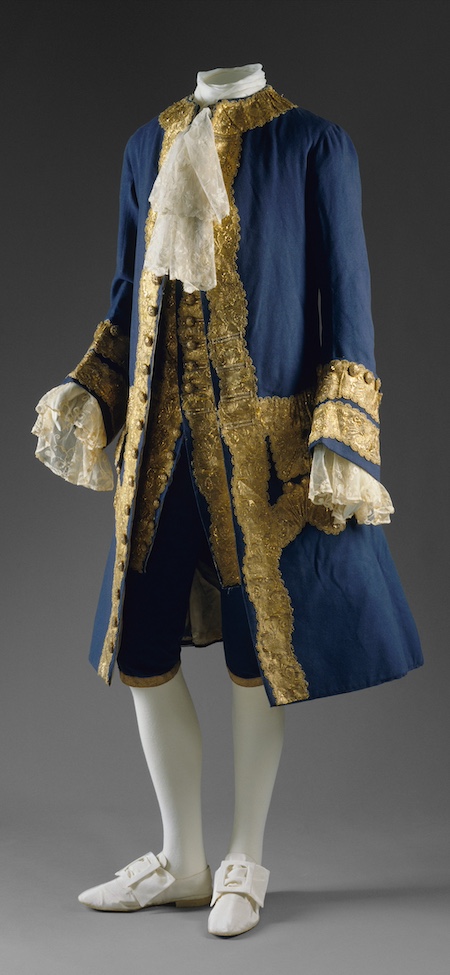
How would you judge a man today, who went for a night out attired in tight silk pants, paired with a velvet jacket embellished with colorful floral embroidery? Would you grumble sitting next to a stranger in a theatre or on an airplane, who sits with his legs splayed, invading your personal space? Yet what would you think about the fellow who sits primly, with his legs together?
In my neighborhood, there are a lot of fine family men, who wear jeans, have beards, and drive big white pickup trucks. Has it been an improvement to whittle away at their acceptable options for presenting themselves? Does that path lead to a better world?
Discover more from Roxane Gilbert
Subscribe to get the latest posts sent to your email.
 Roxane Gilbert